
When the Ground Disappears, Find the Ball
WATCHING, LISTENING, LEARNING, GROWING

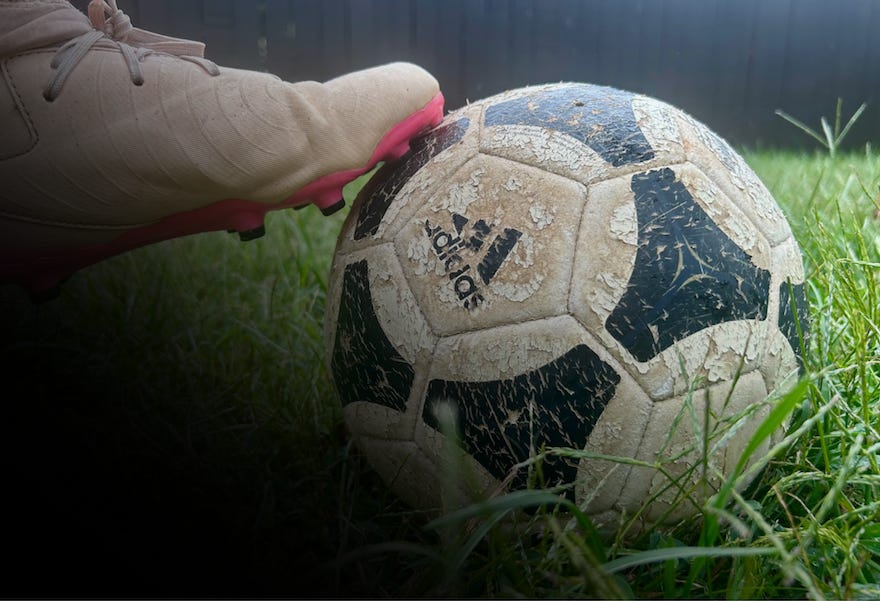
WHEN THE PITCH (AKA THE GROUND) DISAPPEARS
I can’t begin writing without acknowledging what set this new journey in motion. Five and a half years came to an abrupt end in January—not just a job loss, not just a career over, for me and for many others–but the near-collapse of an entire sector and real-life jeopardizing implications that came with it. The landscape of global development and my particular niche–digital development, was basically hit by an earthquake. Much of it is gone or significantly damaged. And it’s hard to grieve my own loss when I consider all the people who are much more profoundly impacted, especially program participants globally.
There’s been plenty of reporting on the unraveling of USAID or as Elon Musk put it, putting the Agency into the wood chipper–but behind the headlines are people–the hungry, the sick, and the underserved. There are also many implementing partners and colleagues who are adrift, searching for their next steps. These are some of the smartest, most committed professionals I’ve ever known. All motivated to change the lives of those with the most need and equally committed to making our collective experience in this world better. I’m deeply proud and honored to have worked at USAID and I’ll always carry that with me as an invaluable and irreplaceable time.
Life can change fast. And how we move forward when the ground disappears–that’s the real test. In the quiet that has followed, I find myself back on the sidelines. Metaphorically… and literally.
A PIVOT OR A ROULETTE?
Where are those sidelines? You could call this a pivot, but it feels more like a Roulette, a move made famous by the Argentinian World Cup winner, Diego Maradona. With one fluid spin, he’d glide past defenders, using his body to shield the ball while keeping control. It’s a turn born of pressure and instinct, not hesitation, an apparent change in direction that carries you forward while keeping you centered.
That’s what this season of my life feels like, a turn made under pressure, grounded in something I’ve always known. Not a pivot so much as a return. A reminder that movement, even when unexpected, can still lead you home.
For me, that home is the game, rediscovered through my daughter’s soccer journey.
Long before I was working in global development, I was working in youth development with DC SCORES, partnering with DC Public Schools to build afterschool programs rooted in soccer and poetry, spaces that gave kids a place to grow, express themselves, and belong. That work shaped me early on, back in my 20s. Even then, I believed soccer was more than a game; it was a platform for growth, a pathway for opportunity, and, for many kids, a home.
Soccer still feels like that to me. I’m drawn to its rhythm and ritual during a time of rapid, seismic change, and inspired by the sense that we’re on the edge of something transformative in the game, here in the DMV, across the country, and around the world.
SWITCHING SIDELINES
One of the most unexpectedly personal shifts with my kids has been deciding when to step away from coaching them and taking my place on the parent’s sideline. I coached both of my kids on their recreational teams, and then stepped aside when they either transitioned to others sports or to higher levels of the game. It’s a different kind of vulnerability—watching, hoping, mostly trying to hold back. As a coach, I spent many years teaching kids how to play with joy and focus, how to respond to mistakes, and how to push their limits. Watching my son play baseball, and especially watching my daughter play soccer requires a different lens—sometimes biting my tongue, sometimes too eager to offer advice, and always questioning how hard to push.
I know the developmental pathways of soccer, the travel game politics, and especially the pitfalls. I know what “good” looks like. But I also know my daughter is only 9. And that this has to be her journey. The hardest part of this transition isn’t letting go of control—it’s resisting the temptation to overcoach when what she really needs is a dad. I’m learning that support looks different from this side of the field, and that the game teaches you just as much when you’re watching as when you’re playing or coaching.
This first post kicks off a 12-part series exploring youth soccer through the lens of a former coach, educator, and—above all—a soccer dad. I’ll dig into coaching education, player development, technology, data, and the growth of the grassroots game, examining how these elements intersect. Along the way, I’ll ask tough questions about the game we’re building through our support—emotional, financial, time and otherwise—and who truly has access, from rec leagues to elite competition.
These entries—Diaries of a Soccer Dad—are thematically linked to The Soccer Sidelines podcast but stand on their own. While written from a father’s perspective, they aim to spark broader conversations about growing the game, exploring the intersections of parenting, coaching, and community—all in service of learning, connection, and thoughtful growth in soccer, locally and beyond.